National Sport of UAE: Jiu-Jitsu, Camel Racing and National Sports of All Countries
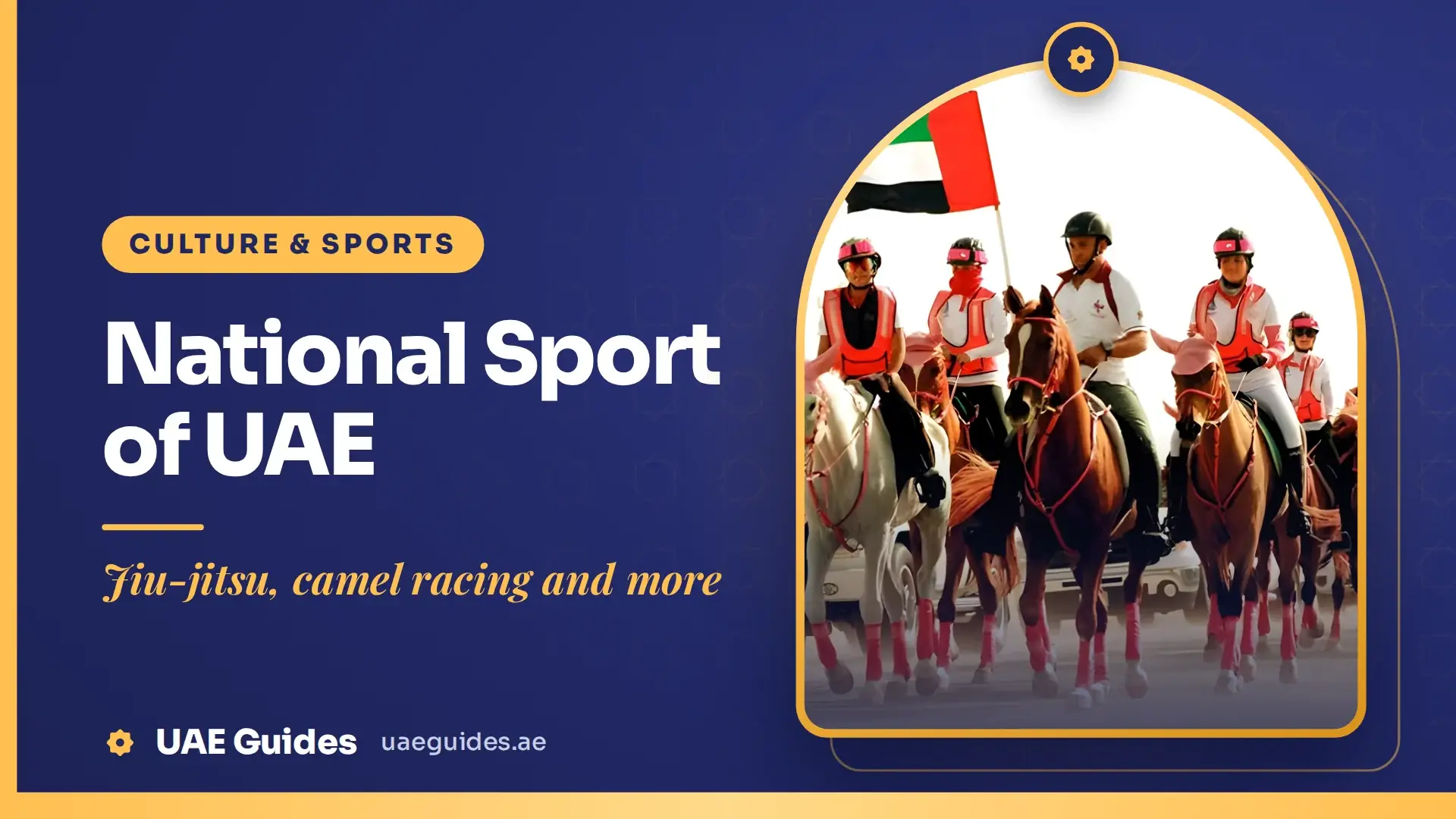
The national sport of UAE has 3 strong claimants: jiu-jitsu, camel racing and falconry. Each one has a real case. Jiu-jitsu is taught in public schools and is promoted by the state as the national sport. Camel racing fills desert tracks every winter with prizes of up to AED 2 million a race. Falconry is listed by UNESCO as world heritage, in a file the UAE itself led. This guide explains each one, shows where to watch them, and lists the national sports of 33 countries.
National Sport of UAE at a Glance
The UAE has no national sport fixed by law. Jiu-jitsu is the sport the state promotes as the national sport, while camel racing and falconry are the 2 heritage sports most tied to Emirati identity.
| Sport | Status in the UAE | Key fact |
| Jiu-jitsu | Promoted as the national sport since 2012 | Taught in Abu Dhabi public schools since 2008 |
| Camel racing | Traditional heritage sport | Robot jockeys replaced child jockeys in 2005 |
| Falconry | Traditional heritage sport | UNESCO listed it in 2010 in a UAE-led file |
| Dhow sailing | Traditional heritage sport | Al Gaffal race covers more than 50 nautical miles |
| Football | Most watched modern sport | UAE Pro League clubs across the emirates |
Jiu-Jitsu in the UAE
Jiu-jitsu is the national sport of the UAE in the modern sense. The country made it a school subject, built a federation around it and hosts the Abu Dhabi World Professional Jiu-Jitsu Championship, which drew a record 10,000 athletes in 2025.
The sport arrived in the early 2000s, when Sheikh Tahnoon bin Zayed Al Nahyan invited leading Brazilian jiu-jitsu coaches to teach in Abu Dhabi. In 2008, jiu-jitsu entered the curriculum of Abu Dhabi public schools. By 2016, 130 schools were teaching it to more than 76,000 students. Today the figure is more than 140 schools.
| Year | Jiu-jitsu milestone in the UAE |
| 1998 | ADCC Submission Fighting World Championship starts in Abu Dhabi |
| 2008 | Jiu-jitsu joins the Abu Dhabi public school curriculum |
| 2009 | First Abu Dhabi World Professional Jiu-Jitsu Championship (May 1 and 2) |
| 2012 | UAE Jiu-Jitsu Federation founded under Sheikh Mohamed bin Zayed |
| 2014 | Ju-jitsu added to the Asian Beach Games in Phuket |
| 2015 | Abu Dhabi Grand Slam tour launches in Tokyo, Los Angeles, Rio and London |
| 2016 | Ju-Jitsu International Federation moves its headquarters to Abu Dhabi |
| 2018 | UAE wins 9 medals as ju-jitsu debuts at the Asian Games in Indonesia |
| 2025 | 17th Abu Dhabi World Pro draws a record 10,000 athletes from 130+ countries |
UAE Jiu-Jitsu Federation
The UAE Jiu-Jitsu Federation (UAEJJF) runs the sport in the UAE. It covers Brazilian jiu-jitsu and also the Japanese-style ju-jitsu used at the Asian Games, which is why both spellings appear in its history. It was founded in 2012 under the direction of Sheikh Mohamed bin Zayed Al Nahyan, now President of the UAE. The federation organises 3 types of events:
- Local championships: Rounds of the Khaled bin Mohamed bin Zayed Jiu-Jitsu Championship and the Jiu-Jitsu President’s Cup, held through the year.
- International tours: The Abu Dhabi Grand Slam series, held in cities such as Tokyo, London and Rio de Janeiro.
- The world championship: The Abu Dhabi World Professional Jiu-Jitsu Championship, the season finale every November.
The federation also set a Guinness World Record for the largest jiu-jitsu training session, with 2,441 fighters on the mats at once. Its full history is on the UAE Jiu-Jitsu Federation milestones page.
Jiu-Jitsu Arena: Mubadala Arena, Abu Dhabi
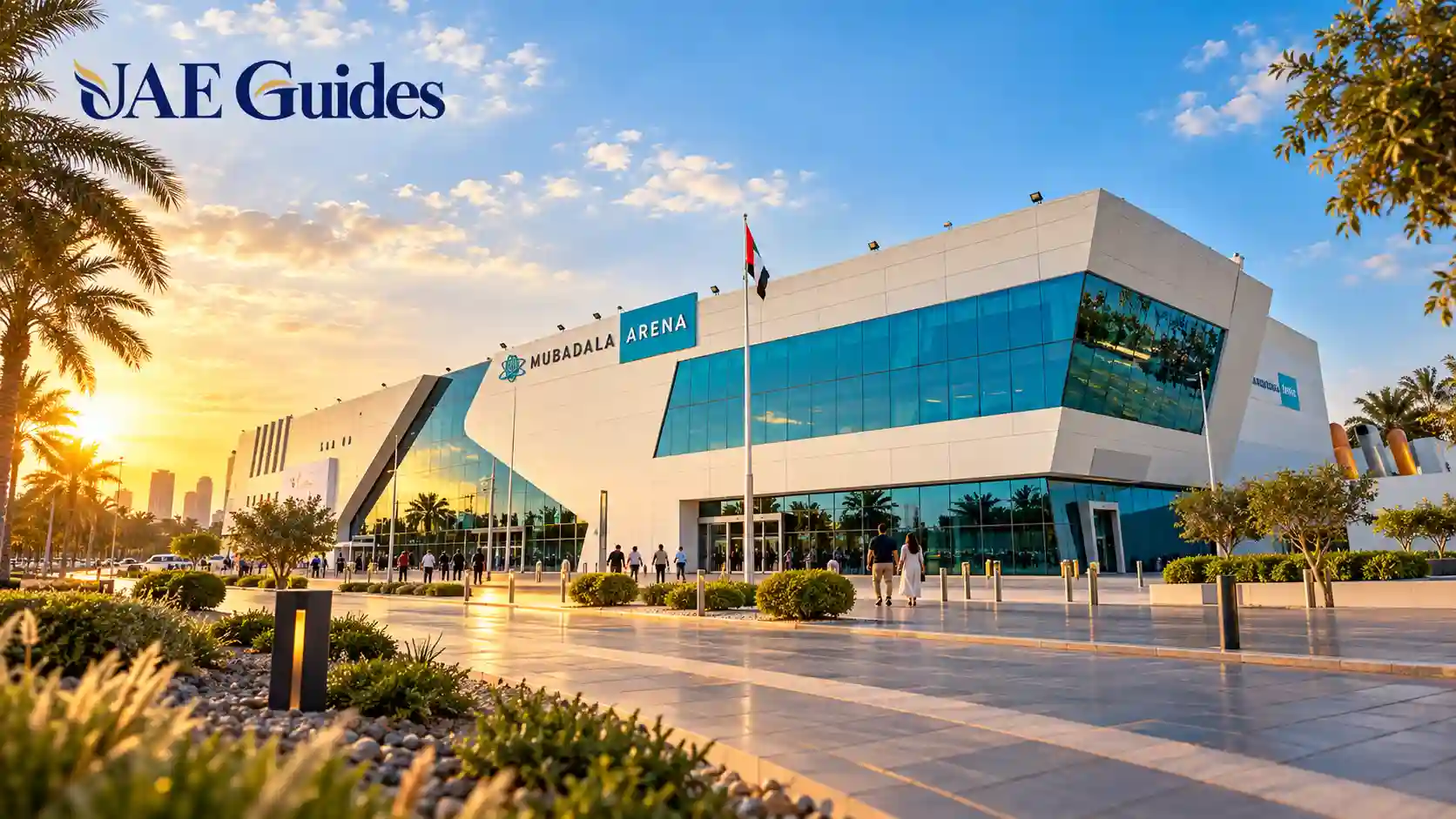
Mubadala Arena is the main jiu-jitsu arena in the UAE. It stands in Zayed Sports City, Abu Dhabi. The UAE Jiu-Jitsu Federation and Mubadala unveiled the name in February 2023, after a naming-rights deal signed in October 2022. The arena still hosted world championships under this name in August 2026. It hosts 4 kinds of events:
- The Abu Dhabi World Professional Jiu-Jitsu Championship
- The Ju-Jitsu World Championship (1 to 9 August 2026, with more than 1,500 athletes)
- National rounds of the UAE Jiu-Jitsu Federation’s championships
- Other combat sports, including IMMAF Youth World MMA Championships and UAE Wrestling Federation events
Jiu-Jitsu in Dubai
Jiu-jitsu in Dubai has grown alongside Abu Dhabi, and Dubai clubs now win national titles. Shabab Al Ahli Club in Dubai hosts the Vice President’s Jiu-Jitsu Cup, where the 2026 titles went to 4 UAE clubs:
| Category | 2026 winning team |
| Under 14 | Palms Sports, Team 777 |
| Under 16 | Sharjah Self-Defense Sports Club |
| Under 18 | Al Jazira Jiu-Jitsu Club |
| Adults | Baniyas Jiu-Jitsu Club |
Dubai also hosts rounds of the AJP Tour, the professional circuit linked to the federation. For beginners, jiu-jitsu classes in Dubai run at private academies and at clubs such as Palms Sports, with sessions for both kids and adults.
Famous UAE Jiu-Jitsu Athletes
UAE jiu-jitsu has produced home-grown champions. Faisal Al Ketbi, Omar Al Fadhli and Mahra Al Hanaei are among the best-known Emirati names with international gold medals. Zayed Al Khateri became the first UAE national black belt champion at the Abu Dhabi World Pro.
Camel Racing in the UAE
Camel racing is the oldest competitive sport in the UAE and the one most tied to Bedouin life. Camels carried families, trade goods and water across the desert for centuries. Informal desert races turned into an organised sport in the 1980s, when the UAE built its first purpose-made camel tracks.
Modern camel racing in the UAE follows 5 rules and features:
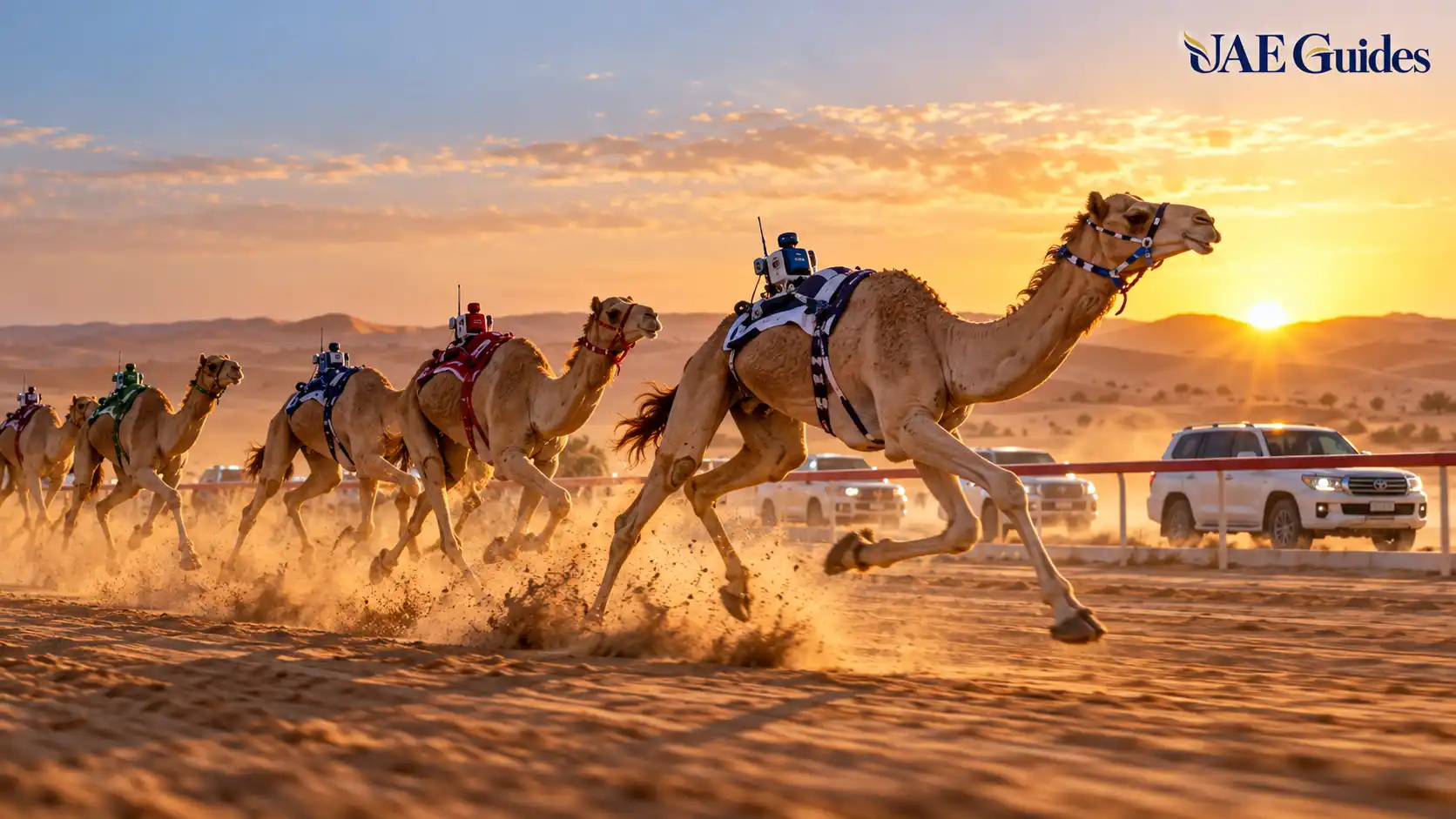
- Robot jockeys: The UAE banned child jockeys under 15 on 29 July 2002 and tightened the law in March 2005. Robot jockeys, developed with Swiss engineers, replaced them from 2005. Owners steer the robots by radio from 4×4 cars driving beside the track.
- Speed: Racing camels reach up to 65 km/h in short sprints and hold about 40 km/h for an hour.
- Distances: Race length depends on the camels’ age group. Races for Emirati owners often run about 6 km, and the 2026 Al Marmoom finale ran 8 km.
- Season: The main season runs from October to April, when the weather is cool, and some closing festivals run into May. Racing pauses through the hottest summer months, as the Dubai weather averages show.
- Prizes: Winning camels earn AED 2,000 to AED 2 million, and top racing camels sell for millions of dirhams.
| Camel racing fact | Detail |
| Child jockey ban | 29 July 2002, tightened March 2005 |
| Robot jockeys | In use since 2005 |
| Active tracks in the UAE | About 15 |
| Racing season | October to April (some festivals into May) |
| Typical race time | Early morning, from about 6 am |
| Entry for spectators | Free on regular race days |
| Biggest festival | Al Marmoom Heritage Festival, Dubai |
Al Wathba Camel Race Track
Al Wathba camel race track is the main camel racing venue in Abu Dhabi. It sits about 45 km from Abu Dhabi city, off the Al Ain Road (E22). Next to the camel track runs a road where owners follow the race in their 4x4s.
| Al Wathba detail | Information |
| Location | Al Wathba, off the Abu Dhabi to Al Ain Road |
| Distance from Abu Dhabi city | About 45 km |
| Season | November to April (training from October) |
| Race start | Early morning, usually from about 6:30 am |
| Duration | 2 to 3 hours per race morning |
| Entry fee | Free, no ticket or booking |
| Nearby | Al Wathba Fossil Dunes |
Al Wathba hosts the season-ending Wathba camel race festival each spring. Race times change with the calendar, so check the schedule a day before you go.
Dubai Camel Racing Club and Al Marmoom Track
The Dubai Camel Racing Club runs all camel racing Dubai events at the Al Marmoom track. The track sits on the Dubai to Al Ain Road (E66), next to Al Lisaili, about 30 minutes’ drive from central Dubai. The site also has a camel hospital, a camel laboratory and the Al Marmoom Heritage Village a few hundred metres from the grandstand.
The Dubai Camel Racing Club publishes the race calendar and runs a “Smart Race” app. The club calendar lists race days, heats and festival finals for the whole season.
Al Marmoom Heritage Festival 2026 in numbers:
| Festival figure | 2026 edition |
| Dates | 22 March to 2 April 2026 |
| Race days | 12 |
| Races | 333 |
| Camels | More than 6,000 |
| Total prize purse | About AED 9 million |
| Top race | Sword of the Emirates, about AED 2 million first prize |
| Entry | Free |
Camel Race Tracks in the UAE
The UAE has about 15 active camel race tracks. The 2 best-known tracks for visitors are Al Wathba in Abu Dhabi and Al Marmoom in Dubai. Other emirates such as Sharjah and Ras Al Khaimah, and the city of Al Ain in Abu Dhabi emirate, also run their own camel tracks with local race days through the season.
How to Watch Camel Racing in the UAE
Watching camel racing is free and needs no booking. Follow these 6 steps for a good first visit:
- Check the race calendar on the club website or app the day before.
- Leave early, because races start soon after sunrise.
- Drive or take a taxi, because no metro line reaches Al Marmoom or Al Wathba.
- Book your return taxi in advance, as cars are scarce in the desert.
- Watch from the grandstand, or follow the race from the side road like the owners do.
- Combine the trip with a desert or fossil dunes tour nearby.
Falconry: The UAE’s Living Heritage Sport
Falconry is the third pillar of Emirati sport. Bedouin hunters trained falcons to catch houbara bustards and hares, a skill passed from father to son for generations.
In November 2010, UNESCO added falconry to its list of the intangible cultural heritage of humanity. The UAE led the file with 11 other countries, including Saudi Arabia, Qatar, France, Spain, Morocco, Mongolia and South Korea. The Emirates Falconers’ Club and the Abu Dhabi heritage authority hosted the conferences that built the case.
Falconry in the UAE today shows up in 3 places:
- Falcon hospitals: The Abu Dhabi Falcon Hospital opened in 1999, treats thousands of birds a year and runs guided tours for visitors.
- Competitions: Falcon speed races run through the cool winter season, with falcons timed over a straight course.
- Exhibitions: The Abu Dhabi International Hunting and Equestrian Exhibition (ADIHEX) showcases falcons, falconry gear and heritage every year.
Other Traditional Emirati Sports
Two more heritage sports keep the sea and desert traditions alive.
- Dhow sailing: The Al Gaffal Traditional Dhow Sailing Race retraces the route of pearl divers coming home. Sixty-foot dhows race more than 50 nautical miles from Sir Bu Nair Island to the coast of Dubai. The 34th edition drew more than 110 dhows, and the 35th edition is set for October 2026.
- Endurance horse riding: Arabian horses compete over long desert courses at venues such as Dubai Endurance City.
Popular Modern Sports in the UAE
Heritage sports carry the identity, but modern sports draw the biggest crowds.
| Sport | Main event or league | Key fact |
| Football | UAE Pro League | The most watched sport in the country |
| Horse racing | Dubai World Cup, Meydan | 30th edition in March 2026, USD 12 million main race |
| Formula 1 | Abu Dhabi Grand Prix, Yas Marina Circuit | Held since 2009, usually the season finale |
| Cricket | ICC headquarters in Dubai | Hosts major international tournaments |
| Motorsport endurance | 24 Hours of Dubai, Dubai Autodrome | Held every January |
| Golf | DP World Tour Championship, Jumeirah Golf Estates | Season finale of the DP World Tour |
National Sports Day
National Sports Day is a yearly day that encourages people to exercise and play sport. Several countries mark one, and the UAE has its own.
The UAE National Sports Day answers a call by Sheikh Mohammed bin Rashid Al Maktoum, Vice President, Prime Minister and Ruler of Dubai, to set aside one day for sport. It is held in early March. The 9th edition ran for 24 hours on 7 March 2024, with 41 activities across all 7 emirates, 48 government bodies taking part and about 50,000 people registered. It is a day of activity, not a public holiday, so check the UAE public holidays list for official days off.
| Country | National Sports Day | Since | Public holiday |
| UAE | Early March (9th edition: 7 March 2024) | Annual, 24-hour event | No |
| Qatar | Second Tuesday of February | 2012 | Yes |
| Bahrain | Second week of February | 2017 | Activity day |
| India | 29 August (birthday of hockey legend Dhyan Chand) | 2012 | No |
| Japan | Second Monday of October (Sports Day) | 1966 | Yes |
| Malaysia | Second Saturday of October | 2015 | No |
Qatar National Sports Day
Qatar National Sports Day falls on the second Tuesday of February every year. Amiri Decree No. 80 of 2011 created it, and it was first held in February 2012. It is a paid public holiday. Ministries, schools and companies run hundreds of free sports events across Qatar, from neighbourhood football to family runs at Old Doha Port.
National Sports of Asian Countries
Many Asian countries have a national sport set by law or by long tradition. The notes below separate the official ones from the popular ones.
National Sport of India
India has no official national sport. In January 2020, the Ministry of Youth Affairs and Sports replied to a Right to Information request that “the government has not declared any sport/game as the National Game of the country.” Field hockey is still widely called the national game, because India won 8 Olympic gold medals in hockey between 1928 and 1980. Cricket is the most popular sport by far, and kabaddi is the leading traditional sport.
National Sport of Pakistan
The national sport of Pakistan is field hockey. Pakistan won 3 Olympic gold medals in hockey (1960, 1968 and 1984) and 4 Hockey World Cups. Cricket is the most popular sport today, led by the 1992 Cricket World Cup win.
National Sport of Sri Lanka
The national sport of Sri Lanka is volleyball. A Ministry of Sports committee declared it the national sport in 1991. Cricket is the most popular sport, with the 1996 Cricket World Cup as Sri Lanka’s biggest win.
National Sport of Bangladesh
The national sport of Bangladesh is kabaddi, known locally as ha-du-du. It received national game status in 1972. Cricket is the most followed sport in the country.
National Sport of Japan
Sumo is the national sport of Japan by tradition. The Japan Sumo Association runs 6 grand tournaments a year. Baseball is the most popular team sport, with a professional league that dates back to 1950.
National Sport of Korea
Taekwondo is the national sport of South Korea. In March 2018, the National Assembly passed a law that names taekwondo the national martial art, and it is widely called the national sport. Kukkiwon, the world taekwondo headquarters, is in Seoul. Taekwondo became a full Olympic sport at Sydney 2000.
National Sport of Malaysia
Sepak takraw is the national sport of Malaysia by tradition. Players kick a rattan ball over a net using their feet, knees and head. Badminton is the country’s most successful Olympic sport.
National Sports of European Countries
National Sport of England
England has no official national sport. Football and cricket share the title by tradition. England wrote the modern rules of both: the Marylebone Cricket Club was founded in 1787, and the Football Association followed in 1863.
National Sport of Scotland
Golf is the national sport of Scotland by tradition. St Andrews is known worldwide as the home of golf, and The Open, the oldest golf major, was first played at Prestwick in 1860. Shinty, a fast stick-and-ball game from the Highlands, is Scotland’s best-known traditional team sport.
National Sport of Ireland
The national sports of Ireland are the Gaelic games, mainly Gaelic football and hurling. The Gaelic Athletic Association (GAA), founded in 1884, runs both. Its Croke Park stadium in Dublin holds about 82,000 fans.
National Sport of Italy
Football is the national sport of Italy by tradition. Italy has won the FIFA World Cup 4 times (1934, 1938, 1982 and 2006) and the European Championship twice (1968 and 2020). Florence still plays calcio storico, a rough historic form of football dating back to the 1500s.
National Sport of Poland
Poland has no official national sport. Football is the most popular, while volleyball and motorcycle speedway also hold national-sport status by tradition. Poland’s men’s volleyball team won the World Championship in 1974, 2014 and 2018.
National Sport of Portugal
Portugal has no official national sport. Football is the national sport by tradition and the most popular game. Portugal won Euro 2016 and the UEFA Nations League in 2019 and 2025.
National Sport of Russia
Bandy is often listed as the national sport of Russia. It is a form of hockey played with a ball on an ice field about the size of a football pitch, with 11 players a side. Ice hockey and football are the most watched sports, and Russia hosted the FIFA World Cup in 2018.
National Sport of Barbados
The national sport of Barbados is cricket. The island plays as part of the West Indies team and has produced legends such as Sir Garfield Sobers, the first player to hit 6 sixes in an over in first-class cricket, in 1968. Kensington Oval in Bridgetown hosted the 2007 Cricket World Cup final and the 2024 T20 World Cup final.
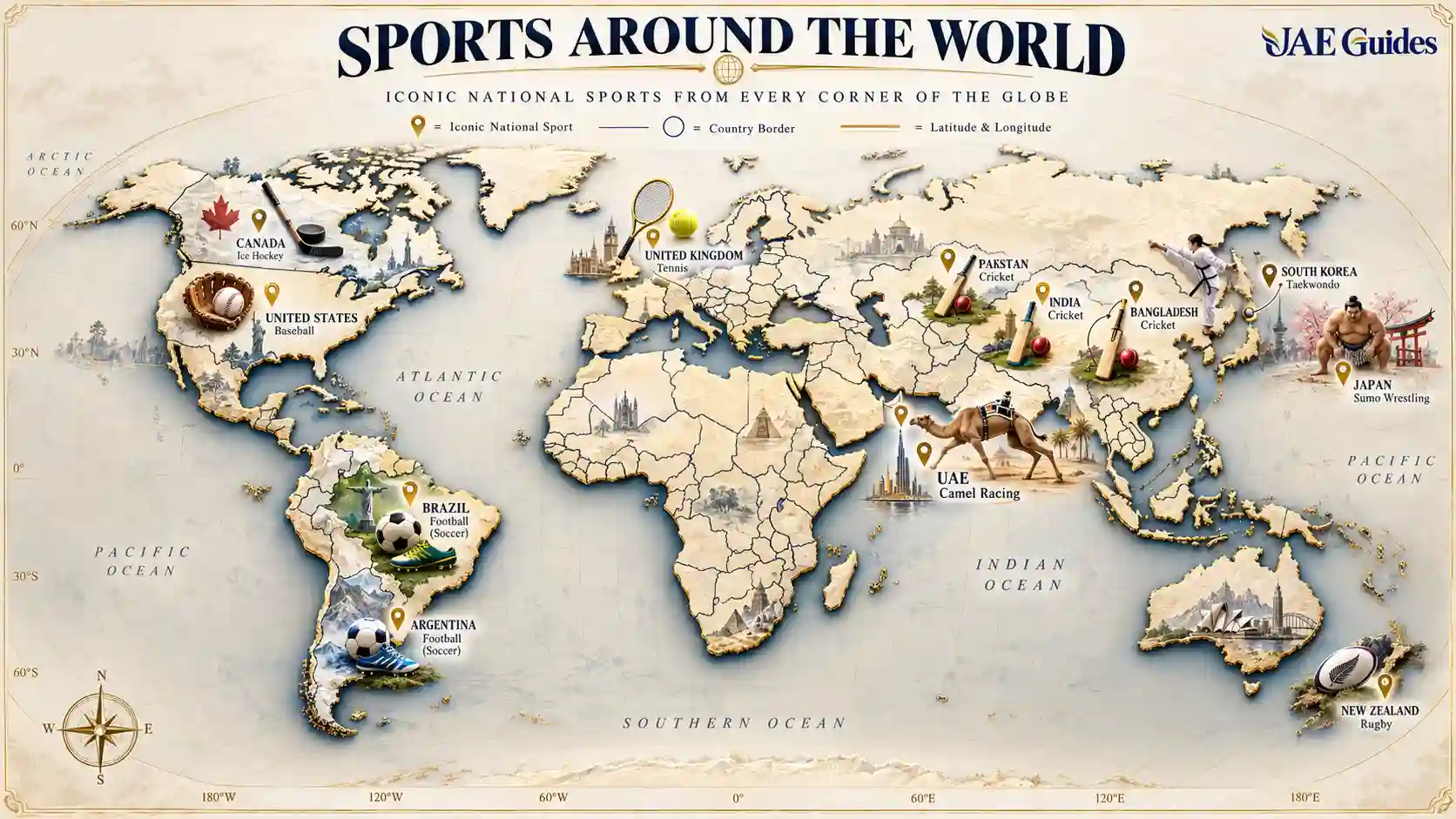
National Sports of All Countries
The table below lists the national sports of 33 countries. “Official” means a law, decree or government decision set the sport. “Tradition” means the sport holds the title by popular use.
| Country | National sport | Status |
| UAE | Jiu-jitsu (modern), camel racing and falconry (heritage) | State-promoted, no law |
| Saudi Arabia | Camel racing, horse racing, falconry | Tradition |
| India | None declared (field hockey widely cited) | No official sport |
| Pakistan | Field hockey | National game |
| Sri Lanka | Volleyball | Official, 1991 |
| Bangladesh | Kabaddi | National game, 1972 |
| Nepal | Volleyball | Official, 2017 |
| Afghanistan | Buzkashi | Tradition |
| Iran | Freestyle wrestling | Tradition |
| Turkey | Oil wrestling, cirit | Tradition |
| China | Table tennis | Tradition |
| Japan | Sumo, baseball | Tradition |
| South Korea | Taekwondo | Official, 2018 |
| Malaysia | Sepak takraw | Tradition |
| Indonesia | Badminton, pencak silat | Tradition |
| Thailand | Muay Thai | Tradition |
| Philippines | Arnis | Official, 2009 |
| England | Football, cricket | Tradition |
| Scotland | Golf | Tradition |
| Ireland | Gaelic games | Tradition |
| Italy | Football | Tradition |
| Spain | Football | Tradition |
| Poland | Football, volleyball, speedway | Tradition |
| Portugal | Football | Tradition |
| Russia | Bandy | Tradition |
| USA | Baseball, American football | Tradition |
| Canada | Ice hockey (winter), lacrosse (summer) | Official, 1994 |
| Mexico | Charrería | Official, 1933 |
| Argentina | Pato | Official, 1953 |
| Brazil | Football, capoeira | Tradition |
| Barbados | Cricket | Tradition |
| New Zealand | Rugby union | Tradition |
| Australia | None official (cricket and Australian rules football widely cited) | No official sport |
All Nations Sports Academy
All Nations Sports Academy is a private sports academy for children in the UAE. It was founded in 2015 and is based on Sheikh Ammar Bin Humaid Street in Al Tallah 2, Ajman. The academy coaches 8 activities:
| Activity | Notes |
| Football | Boys and girls from age 3 |
| Basketball | Kids’ coaching |
| Swimming | Kids’ lessons |
| Cricket | Kids’ coaching |
| Table tennis | Kids’ coaching |
| Tennis | Kids’ coaching |
| Gym training | Fitness sessions |
| Holiday camps | During school breaks |
The academy serves families in Ajman, Sharjah, Dubai, Abu Dhabi and Umm Al Quwain. Its call centre number is +971 56 435 9078.